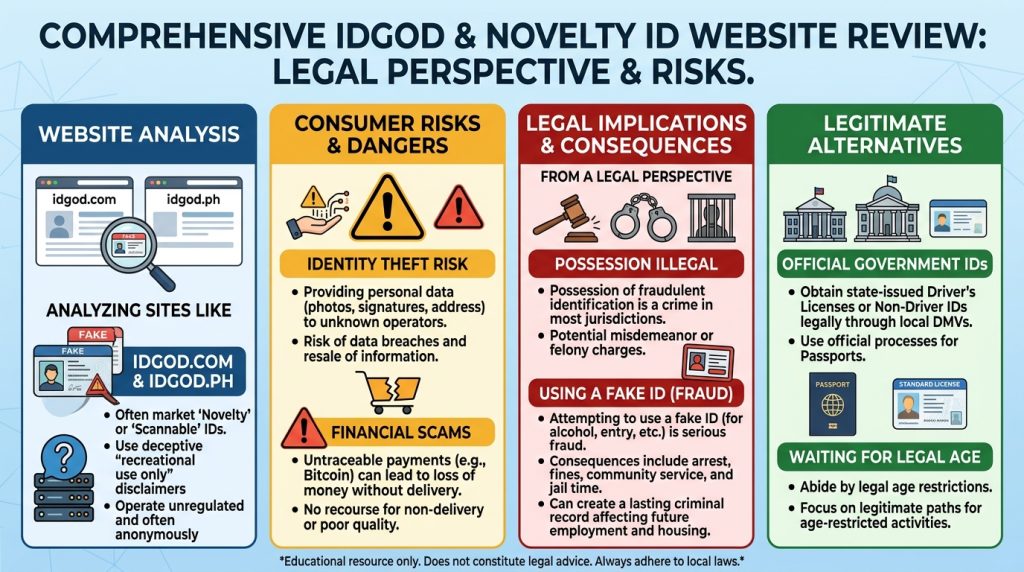
In an era where our lives are increasingly digital, the temptation to find shortcuts for age-restricted access or identity verification has led many to corners of the web promising quick fixes. However, what often starts as a search for convenience can quickly spiral into a nightmare of financial loss and legal jeopardy. Understanding the landscape of fake id scams is essential for anyone navigating the complexities of online identity in 2026.
The Evolution of Online Identity Fraud
The digital marketplace for identification has grown increasingly sophisticated. Sites like IDGod (including its various extensions like .com and .ph) have long been at the center of discussions regarding “high-quality” replicas. While these platforms often market themselves as providing “novelty” items, the reality is far more clinical. Operating in a legal gray area, these services often expose users to a cycle of vulnerability that goes beyond a simple transaction.
When individuals engage with these platforms, they aren’t just buying a piece of plastic; they are handing over sensitive personal data—including high-resolution photos and addresses—to unregulated entities. This data often becomes the fuel for larger identity theft rings, proving that the initial cost of the ID is only the beginning of the financial risk.
Serious Legal and Financial Consequences
It is a common misconception that getting caught with a fraudulent document results in nothing more than a simple confiscation. In reality, the fake id risks carry heavy weight in the eyes of the law. Depending on the jurisdiction, possession can escalate from a misdemeanor to a felony, especially if the document is used to defraud a government agency or a financial institution.
Beyond the courtroom, the “hidden” risks include:
- Persistent Identity Theft: Once your biometric data and PII (Personally Identifiable Information) are on a scammer’s server, they can be sold on the dark web repeatedly.
- Financial Blacklisting: Banks and fintech platforms now use advanced AI-driven verification. Being flagged for using a fraudulent document can lead to a permanent ban from essential financial services.
- Career Sabotage: A criminal record involving fraud or forgery is a major red flag for employers, often appearing in background checks for decades.
Protecting Your Digital Future
The most effective way to avoid these pitfalls is to rely on legitimate, government-issued identification and to stay informed about how these scams operate. While websites may claim to offer “stealth” shipping or “scannable” technology, search engines and security protocols have evolved to detect these patterns with high accuracy.
In 2026, “staying safe” means recognizing that there are no shortcuts to a valid identity. By avoiding fake id scams and understanding the long-term fake id risks, you protect not just your wallet, but your future reputation and legal standing. True security comes from transparency and the use of legitimate alternatives, rather than trusting your personal data to the shadows of the internet.